For almost a decade, 1.5°C has been the defining benchmark of international climate ambition. It gave governments, investors and companies a common reference point: a threshold beyond which climate impacts become substantially more severe and potentially irreversible.
Now the conversation is changing.
A new United Nations Environment Programme report, Limiting Overshoot: Navigating Exceedance of 1.5°C and Pathways Towards Return, concludes that the world is likely to exceed 1.5°C. The critical question is no longer simply whether the threshold can be avoided. It is how far temperatures rise above it, how long they remain there, and whether the global economy can create a credible route back below it.
That route has a name: overshoot, peak and decline.
It means rapidly reducing greenhouse-gas emissions, limiting the eventual temperature peak, adapting to worsening climate impacts, and eventually achieving net-negative emissions by removing more carbon dioxide from the atmosphere than humanity emits.
This is not a reason to weaken the case for decarbonisation. It is the opposite. The more slowly emissions fall this decade, the larger, costlier and riskier the removal task becomes later.
Overshoot is not a new target
There is a danger that discussion of overshoot will be misunderstood as permission to miss climate goals. UNEP is explicit: exceeding 1.5°C should not be treated as a new destination or a relaxed benchmark. It is a warning about the narrowing set of options left to the global community.
The difference matters.
A temporary overshoot of 1.5°C is materially different from allowing warming to climb unchecked. Every tenth of a degree intensifies risks to food systems, water security, public health, infrastructure, ecosystems and economic stability. Higher peak warming also increases the probability of crossing climate-system tipping points, including irreversible losses in ice systems and disruptive changes in major ocean circulation patterns.
The practical goal, therefore, is to make the overshoot as shallow and as short as possible.
That requires three things at once:
Immediate and sustained reductions in fossil-fuel emissions, including methane.
Faster investment in resilience and adaptation, especially for vulnerable communities and exposed sectors.
The development of high-integrity carbon dioxide removal capacity for residual emissions and eventual net-negative pathways.
The sequencing is essential. Carbon removal is an addition to deep emissions cuts, not an alternative to them.
Why carbon removal has moved centre stage
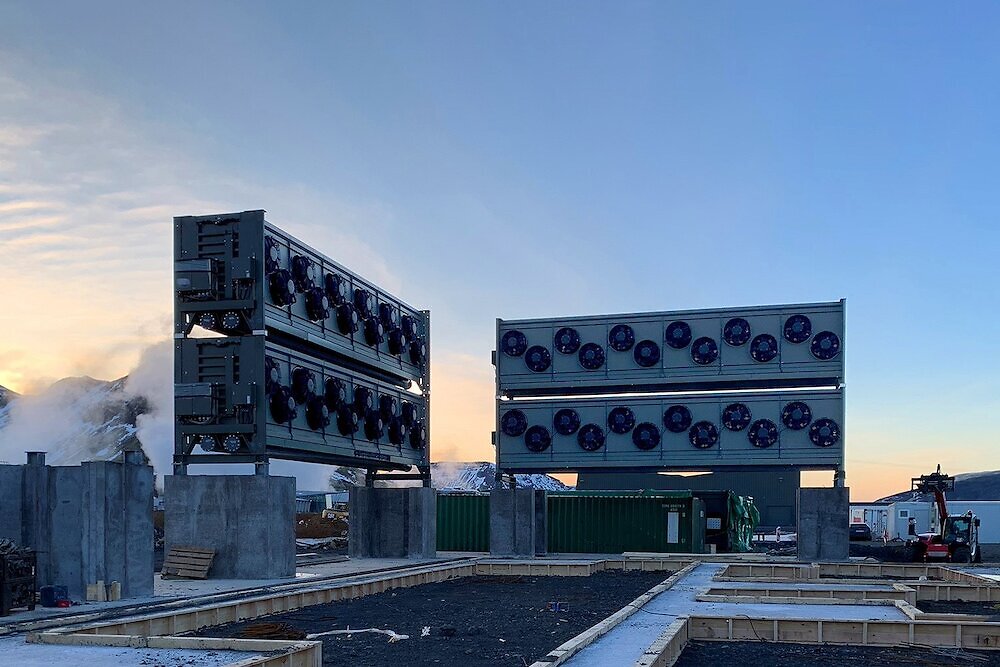
Carbon dioxide removal, often shortened to CDR, covers approaches that remove carbon dioxide from the atmosphere and store it durably. These approaches range from restoring forests, peatlands and coastal ecosystems to engineered approaches such as direct air capture with geological storage, bioenergy with carbon capture and storage, enhanced rock weathering and biochar.
Each pathway has different strengths, constraints and timelines.
Nature-based approaches can deliver important co-benefits for biodiversity, water and livelihoods, but they require careful treatment of land rights, permanence, leakage and wildfire risk. Engineered removals may offer more measurable and durable storage, but remain expensive, energy-intensive and at an early stage of commercial deployment.
The key point is that the scale required is immense. According to the reporting on UNEP’s findings, carbon-removal technologies would need to be deployed at extraordinary rates, potentially faster than historical solar-power deployment, while suitable geological storage is itself a constrained resource.
That means CDR should no longer be viewed as a niche innovation category. It is becoming a strategic infrastructure question involving energy, land, geology, measurement, finance, procurement and international governance.
The business question: what is credible?
For companies, investors and carbon-market participants, the shift creates
opportunity but also a much higher integrity threshold.
A credible carbon-removal strategy should include five elements.
First, cut absolute emissions before claiming neutrality. Companies should prioritise direct operational decarbonisation, clean electricity, energy efficiency, electrification, supply-chain action and product redesign. Removals should address residual emissions that cannot yet be eliminated, rather than offset business-as-usual emissions indefinitely.
Second, distinguish avoidance from removal. Avoided-emission credits and carbon-removal credits are not interchangeable. A project that prevents emissions may be valuable, but it does not remove historic CO₂ already in the atmosphere. Corporate claims, procurement strategies and market rules must reflect that difference.
Third, value durability. A tonne of CO₂ stored for decades is not equivalent to one stored for centuries or millennia. Buyers should understand reversal risks, monitoring periods, insurance arrangements and what happens if stored carbon is released.
Fourth, demand robust measurement, reporting and verification. High-integrity CDR requires transparent baselines, additionality, independent verification, clear accounting and public disclosure of uncertainty. Digital measurement systems and satellite, sensor and lifecycle data will increasingly be central to market confidence.
Fifth, protect social and ecological integrity. Large-scale removal must not create land conflict, displace food production, undermine biodiversity or shift burdens onto local communities. Social safeguards and benefit-sharing need to be built into project design and crediting frameworks from the beginning.
From voluntary claims to carbon-removal procurement
The emerging market may be less about simple offsetting and more about long-term procurement.
Some corporate buyers are beginning to contract for future carbon-removal delivery through advance market commitments, multi-year offtake agreements and portfolios spanning both nature-based and engineered solutions. This structure can help developers finance early projects while giving buyers greater visibility over future supply.
However, early procurement comes with risk. Technologies may fail to scale, storage pathways may face permitting obstacles, project costs may remain high, and policy rules may change. Buyers should therefore treat removal procurement as a strategic climate and innovation investment, not merely a communications exercise.
For financial institutions, this creates several investable themes:
Carbon accounting, MRV and climate-data infrastructure.
Geological storage assessment and carbon-transport networks.
Direct-air-capture equipment, clean heat and low-carbon power supply.
Biochar, biomass logistics and sustainable feedstock systems.
Ecosystem restoration and natural-capital projects with robust governance.
Insurance, warranties and risk-management products for carbon permanence.
The winners will not necessarily be those promising the cheapest tonne today. They may be the organisations that can demonstrate durable storage, transparent data, sound governance and a scalable path to lower cost.
A defining test of climate leadership
The 1.5°C overshoot report changes the framing of climate leadership.
It is no longer enough to announce a distant net-zero target, buy low-cost credits or rely on generic assumptions about future technology. Organisations need transition plans that show what they will cut, what they cannot yet cut, how they will manage climate risks, and how they will responsibly address residual emissions.
The most credible leaders will be those that combine urgency with honesty.
They will cut emissions now. They will invest in resilience. They will support the development of carbon-removal capacity without using it to delay the fossil-fuel transition. And they will disclose the limits and uncertainties of their strategies rather than presenting net zero as a simple accounting exercise.
Overshoot is not an invitation to give up on 1.5°C. It is a stark reminder that every delayed decision makes the path back harder.
Sources
UNEP — Limiting Overshoot: Navigating Exceedance of 1.5°C and Pathways Towards Return
UNEP — World set to cross 1.5°C global warming, but can still limit, adapt and return
UNEP — Overshoot explained: five things to understand about a world beyond 1.5°C
Eos — The World Will Overshoot 1.5°C and Must Now Remove Carbon, United Nations Says