80% of Firms Have No Documented ESG Supply Chain Strategy, EcoVadis IndexFinds
EcoVadis finds 80% of firms have no documented ESG supply chain risk process, and 98% lack an accessible worker grievance mechanism.

EcoVadis finds 80% of firms have no documented ESG supply chain risk process, and 98% lack an accessible worker grievance mechanism.

MEPs paired the CBAM tightening with a 2027-29 decarbonisation fund protecting EU fertiliser producers and exporters from carbon costs.

MEPs close key CBAM loopholes and extend the EU carbon border mechanism to downstream steel and aluminium goods.

COP31 host Turkey says developing countries need close to $1 trillion for climate targets — dwarfing this week's $163bn MDB record

MDBs hit a record $163bn in climate finance for 2025, just as the World Bank quietly abandons its own climate lending target

The European Commission adopted its revised Sustainability Reporting Standards this month — here's what's actually different for companies preparing CSRD disclosures.

The SEC's move to rescind its 2024 climate disclosure rules signals a broader US retreat from prescriptive rulemaking — here's what it means for teams reporting across US and EU markets.

The SEC's climate disclosure rollback and the EU's newly adopted revised ESRS reveal a widening transatlantic split on sustainability reporting rules.

Regulation (EU) 2024/3005 is in force. ESMA supervises ESG rating providers. Providers must notify by 2 August. But the regulation solves a transparency problem — it does not resolve the due diligence responsibility that remains squarely with asset managers.

In one week, the EU revised its ESRS, opened its SFDR transition label to fossil fuels, and launched three taxonomy simplification consultations. This is not the end of the EU sustainable finance framework — it is a structural reconfiguration. Here is how to read it.

A new joint study by IFAC, AICPA and CIMA finds that the onset of mandatory sustainability requirements is beginning to transform corporate reporting globally — but preparedness varies sharply across jurisdictions, company sizes, and sectors

Europe's three primary financial regulators have each launched consultations on simplifying EU Taxonomy KPIs. ESMA targets the OpEx metric, EBA proposes eliminating low-value banking KPIs, and EIOPA wants to redesign the insurance underwriting indicator. Responses are due by 12 August 2026.

While regulatory debates dominated this week's headlines, three green bond issuances demonstrated that sustainable capital markets are expanding geographically — reaching Japan's Samurai bond market, South-East Asia's rooftop solar sector, and Turkish climate-resilient agriculture.

The World Bank retired its 45% climate co-benefits lending target under sustained US pressure — despite having exceeded it the previous year, reaching 48% of total lending. Here is what it means for multilateral climate finance accountability, the $120bn MDB goal, and how investors should read the signal.
The European Parliament's ECON committee votes on its SFDR 2.0 position on 15 July. Here is what is at stake — and the three outcomes that matter most for sustainable fund labelling.

The EU Council's SFDR 2.0 negotiating position removes the Commission's proposed exclusion of fossil fuel expansion from transition fund labels. A company opening new oil fields can now qualify — if 20% of its capex is taxonomy-aligned and it adopts a Scope 1–2 emissions plan. The European Parliament's ECON committee votes on 15 July.

Alongside the revised ESRS, the European Commission adopted a voluntary sustainability standard for SMEs — and made it the legal ceiling for what larger companies can demand from their value chains from FY2027.

The European Commission adopted the revised European Sustainability Reporting Standards on 3 July. Mandatory datapoints are down 61%, total datapoints down 70%, and reporting costs expected to fall by over 30% per company. Here is what changed, what survived, and what to do before FY2027.

Forty jurisdictions have decided to use or are taking steps to introduce ISSB Standards. Here is what the current adoption picture means for companies reporting across multiple jurisdictions — and what comes next.

Research shows 94% of companies cite C-suite commitment as the top enabler of integrated sustainability — yet 50% still cannot measure ROI. Here is what separates the organisations building business value from those trapped in the compliance posture.

CSRD is mandatory for thousands of EU companies — but the thresholds, timelines, and simplified standards introduced for SMEs have changed what compliance looks like. Here is the current picture for companies preparing for FY2027 reporting.

The EU Council has agreed its position on a fundamental overhaul of the Sustainable Finance Disclosure Regulation, replacing Article 6/8/9 with three clearer product labels. Here is what the new framework means for asset managers and distributors before trilogue begins.

Sustainability, finance and risk teams enter 2026 in a completely different landscape: sustainability data is no longer a side report, but a regulated, investor-grade part of corporate reporting and the cost of capital. At the same time, sustainable finance instruments – from sustainability-linked loans to EU green bonds – increasingly demand alignment with specific frameworks and taxonomies.gov+6 This guide explains which sustainability frameworks are most likely to apply to your business in 2026, what they mean for reporting and risk, and how to turn them into a coherent roadmap that also supports project finance and capital raising. It also shows how bsustainable today membership and downloadable templates can help you move from theory to implementation much faster.

Regulation (EU) 2024/3005 enters into force today, placing ESG rating providers under direct ESMA supervision for the first time. Here is what it means for issuers, funds, and rating providers — and the three actions to take before 2 August.

For most of this decade, the story of sustainable finance has been one of expansion. More issuers, more frameworks, more capital, more ambition. This week offered a different kind of story — and it is one that everyone working in ESG, sustainability communications, or climate investment needs to understand clearly.

The EU Council’s proposed overhaul of the Sustainable Finance Disclosure Regulation (SFDR) marks a decisive shift toward clearer product categories and stricter safeguards against greenwashing. Replacing the widely criticised Article 6/8/9 framework, the new model introduces three intuitive classifications—sustainable, transition, and ESG basics—designed to better align investor expectations with product reality. Crucially, the reforms strengthen the use of principal adverse impact (PAI) indicators, enforce more consistent disclosure standards, and set stricter conditions for including fossil fuel exposures within transition strategies. While aimed at improving transparency for EU investors, the changes carry significant implications for UK-based asset managers. Firms operating cross-border will face a dual compliance challenge as they align both with the UK’s Sustainability Disclosure Requirements (SDR) and the evolving SFDR regime, requiring updates to product labelling, data systems, and investor communications. As negotiations progress, the direction is clear: a more structured, data-driven sustainable finance framework that raises the bar for credibility—and one that London-based firms cannot afford to treat as purely an EU concern.
The Corporate Sustainability Reporting Directive introduces comprehensive disclosure requirements for companies operating in the European Union.
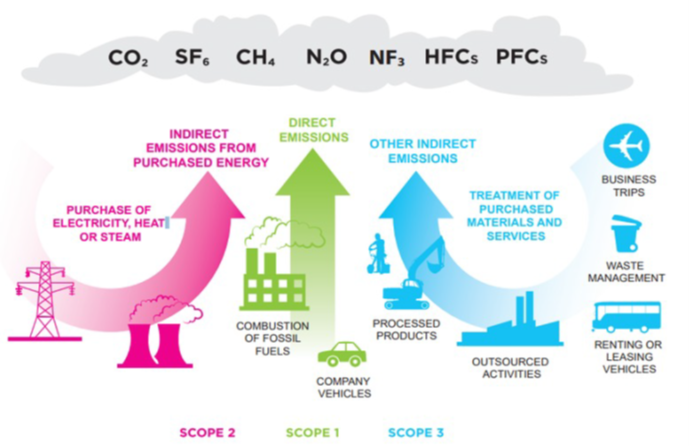
As companies face increasing pressure to address their full carbon footprint, Scope 3 emissions have become the new frontier in climate accountability.
Following the Kunming-Montreal Global Biodiversity Framework, companies are beginning to address their nature-related impacts and dependencies.
Regulators worldwide are implementing stricter rules to combat misleading environmental claims, reshaping how companies communicate their sustainability efforts.
From product-as-a-service to industrial symbiosis, companies are finding profitable paths to reducing waste and extending product lifecycles.
Human capital management, diversity initiatives, and supply chain labor practices are receiving unprecedented attention from investors and regulators.