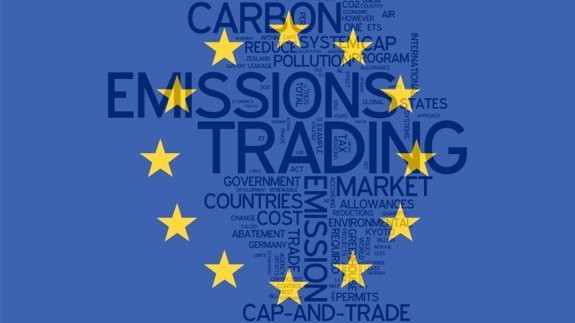
The most important sustainability story this week isn’t a new label, a fresh framework, or another debate over definitions. It’s a reminder that sustainable finance ultimately follows incentives — and in Europe, few incentives matter more than the EU Emissions Trading System (ETS).
The European Commission’s proposed ETS overhaul is significant because it attempts to reconcile two realities that have been on a collision course: the EU’s climate ambitions and the political-economic pressure to keep heavy industry competitive. Slowing the rate at which the ETS cap tightens, extending free allowances for sectors like steel and cement, and creating larger pools of support for clean-tech investment will be read by markets as a recalibration of the transition pathway. For issuers, this can influence everything from carbon-price assumptions in business cases to the timing of capex and the credibility of transition plans.
But the bigger shift is how explicitly the package links policy support to investment behaviour. The Commission’s logic is not simply “emit less,” but “invest here.” Conditionality around free permits, alongside investment-boosting funds and guidance on how revenues should be spent, points toward a carbon market that functions as industrial policy as much as climate policy. That is likely to matter for sustainable finance structures: transition-linked bond frameworks, sustainability-linked loans, and blended-finance approaches that can help de-risk industrial decarbonisation.
In parallel, the reporting and disclosure landscape is moving into a new phase: pragmatism. The ongoing work to simplify ESRS datapoints and consultations on EU Taxonomy disclosures signal that the next era will be about usability and cost of compliance — without losing decision-usefulness. This matters because the credibility of transition finance depends on data: what is aligned, what is improving, what is still risky. If disclosure regimes become clearer and less burdensome, they can support better capital allocation rather than becoming a box-ticking exercise.
Finally, nature and biodiversity are edging closer to the mainstream finance conversation. Updated guidance from TNFD and EU implementation steps on nature restoration reinforce a simple point: climate risk is not the only systemic risk on the balance sheet. Over time, we should expect transition plans to broaden — from decarbonisation alone to resilience, land-use impacts, and nature dependencies.
The direction of travel is clear. The most competitive organisations will be those that treat regulation, disclosure and financing as one integrated strategy — not three separate workstreams.
Sources: https://www.reuters.com/business/environment/eus-plan-overhaul-its-carbon-market-2026-07-17/; https://kpmg.com/xx/en/our-insights/regulatory-insights/sustainability-regulatory-radar-july-2026.html; https://kpmg.com/xx/en/our-insights/ifrg/2026/eu-taxonomy-esa-amendments.html; https://www.esgtoday.com/tnfd-releases-updated-guidance-on-nature-related-financial-disclosures/