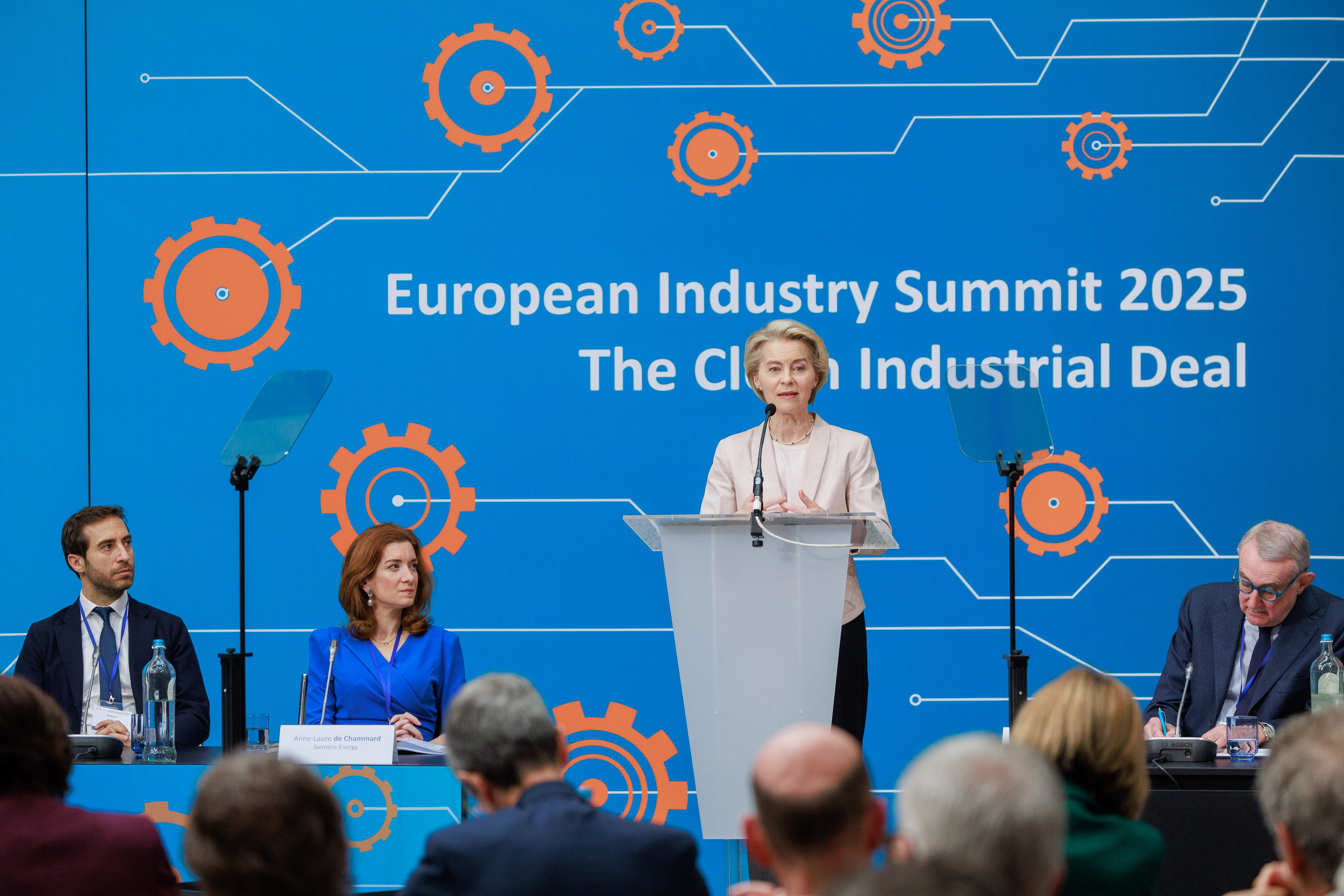
From climate policy to market design
The Commission proposed the Industrial Accelerator Act in March 2026. If adopted by the European Parliament and Council, the proposed regulation would establish a framework to accelerate industrial capacity and decarbonisation in strategic sectors.
The proposal is significant because it would seek to strengthen demand for low-carbon and European-produced products through public procurement and public-support mechanisms. It includes measures intended to support lead markets for strategic goods and materials, while considering carbon performance, resilience and Union-origin criteria.europarl.
That may appear technical, but its commercial implications are substantial.
Public procurement is one of the strongest levers available to governments. When public authorities give greater weight to low-carbon performance, supply-chain resilience and European production, they can create demand for cleaner materials, technologies and manufacturing capacity.
Instead of asking businesses to decarbonise only through reporting or regulation, the EU is beginning to reshape the market in which those businesses compete.
For suppliers, this means sustainability credentials may increasingly influence access to contracts, grants, partnerships and investment. Product carbon data, supply-chain traceability, recycled-content evidence and lifecycle performance are becoming commercial capabilities, rather than compliance exercises conducted in isolation.
Why industrial decarbonisation is difficult
The political urgency behind the Clean Industrial Deal is understandable. Steel, cement, chemicals, aluminium, glass and other energy-intensive industries face high energy costs, global competition and difficult investment choices.
They also face a technical reality: some industrial emissions cannot be eliminated through renewable electricity alone.
For cement, lime, chemicals and some metals processes, emissions arise from both energy use and industrial chemistry. This means credible decarbonisation pathways are likely to require a combination of energy efficiency, electrification, renewable electricity, hydrogen, circular-material inputs, process innovation and, in selected cases, carbon capture and storage.
The European Commission’s Joint Research Centre has mapped technology and funding needs across sectors including steel, cement, ammonia, pulp and paper, aluminium, ceramics and glass.
The challenge is not simply to reduce emissions. It is to do so without transferring production, jobs and emissions to regions with weaker climate requirements or lower energy costs.
If cleaner European production is displaced by higher-emission imports, Europe risks undermining both its climate objectives and industrial resilience.
Finance must follow ambition
The Clean Industrial Deal includes an ambition to mobilise more than €100 billion to support clean manufacturing in Europe. The Commission has also proposed an Industrial Decarbonisation Bank to support financing for industrial transition, including through the Innovation Fund and other EU-level instruments.
This is particularly important for projects that deliver clear emissions reductions but struggle under conventional financing conditions. Industrial-decarbonisation projects can involve technology risk, high capital expenditure, uncertain offtake, shared infrastructure needs and long return periods.
For companies, the policy direction is already clear. Businesses that can demonstrate credible decarbonisation pathways, scalable technology deployment and resilient value chains are likely to be better positioned for public support, private investment and strategic customer relationships.
However, policy momentum alone does not make a project investable.
Companies will need robust business cases, detailed capital requirements, clear risk allocation, credible implementation plans, secure demand or offtake and measurable emissions outcomes. A strong narrative must be supported by operational and financial evidence.
Circularity is a competitiveness issue
The Clean Industrial Deal also gives circularity a more strategic role.
Europe depends heavily on imported critical raw materials used in batteries, renewable technologies, electricity grids, electronics and advanced manufacturing. Reducing that dependency is not simply an environmental objective. It is a supply-security and competitiveness issue.
The Commission has signalled its intention to propose a Circular Economy Act, designed to support the free movement of reusable and recyclable products and strengthen markets for secondary materials.
For companies, this creates opportunities to improve material efficiency, use more recycled content, develop repair and remanufacturing models and secure traceable secondary-material supply.
The strongest sustainability strategies will increasingly connect carbon reduction, resource efficiency, cost control and supply-chain security. These are not separate agendas. They are different aspects of industrial resilience.
What businesses should do now
Companies should not wait for every aspect of the proposed Industrial Accelerator Act or wider Clean Industrial Deal to be finalised. Four actions are already relevant.
Assess exposure to public procurement and support. Businesses operating in infrastructure, energy, transport, construction, manufacturing and public-sector supply chains should assess how low-carbon, resilience and European-origin criteria could affect their market position.
Turn sustainability data into commercial evidence. Product-level emissions information, material provenance, circularity data and supplier evidence should be robust enough for customers, lenders and public authorities to use in decisions.
Define a credible industrial pathway. Companies should identify which mix of efficiency, electrification, renewables, circular inputs, hydrogen, CCUS and process innovation is realistic for their assets and value chains.
Prepare investable projects. A credible transition plan should link emissions outcomes to capital expenditure, delivery milestones, financing needs, operational risks and expected commercial benefits.
The new competitive question
Europe’s clean-industrial agenda will continue to generate debate. There are valid questions about trade, affordability, state aid, implementation speed and the balance between industrial support and open competition.
But the direction of travel is becoming increasingly clear.
The sustainability conversation is shifting away from ambition in isolation and towards the systems that determine what gets financed, manufactured and purchased. For businesses, that represents both a challenge and an opportunity.
The next generation of market leaders may not be those that make the boldest climate claims. They may be those that can demonstrate — with credible data and investable plans — that low-carbon production, resilient supply chains and circular resource use make for a stronger business.
Sources and further reading
European Commission, Clean Industrial Deal — official overview of the Deal, including clean manufacturing, energy affordability, circularity, skills and financing.
European Commission, Industrial Accelerator Act — official page for the March 2026 legislative proposal on industrial capacity and decarbonisation in strategic
European Parliament, Legislative Train Schedule: Industrial Accelerator Act — legislative-status and policy overview, including the proposal’s strategic-sector focus.
European Commission Joint Research Centre, Industrial Decarbonisation in the EU: What Emerging Technologies Need Funding? — sector-specific industrial-decarbonisation pathways and technology needs.
Rabobank, Carbon Capture, Utilization, and Storage in Europe — Part 1 — background on CCUS and its potential role in European industrial decarbonisation.
Florence School of Regulation, The EU Clean Industrial Deal — independent analysis of the Deal’s policy pillars and circular-economy agenda.