Data centres sit at the centre of digital business – and, increasingly, at the centre of corporate climate strategies that BSustainable Today tracks across CSRD, ESRS and EU Taxonomy. Demand from AI workloads and cloud services is driving electricity use sharply higher, often in grids that remain carbon‑intensive. The result is an emerging energy and carbon crunch for data centres, with operators facing grid‑connection limits, rising costs and growing pressure to decarbonise without compromising reliability.
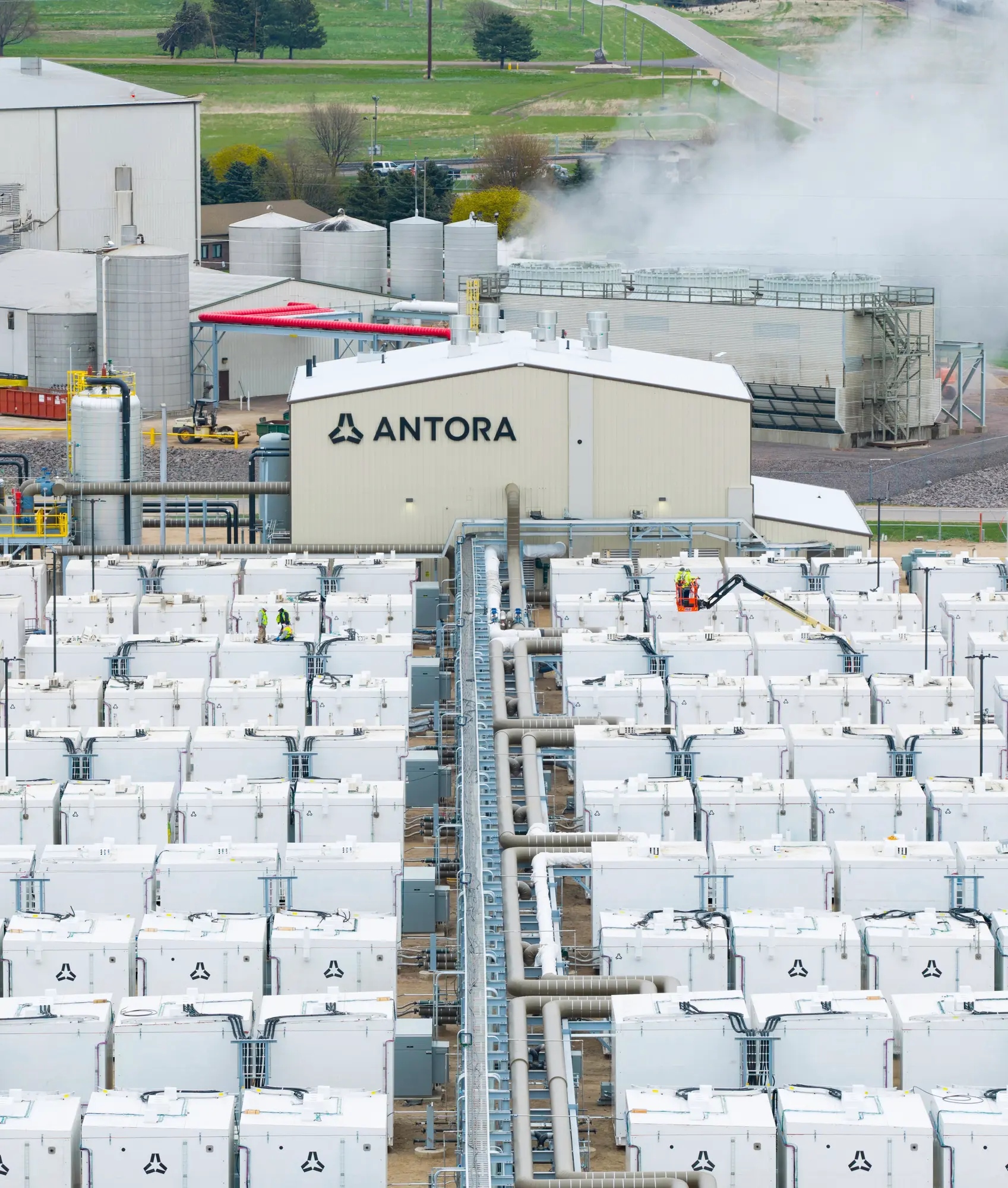
Against that backdrop, BSustainable Today reports on analysis from Inc. Magazine and regulatory round‑ups noting that Antora Energy has raised around 550 million dollars to build a second US factory and scale its thermal energy storage technology. Antora’s system uses blocks of solid carbon, heated to extremely high temperatures – around 4,352 degrees Fahrenheit – to store energy. When power is needed, the stored heat is converted back into electricity, providing dispatchable, zero‑carbon power designed to match data‑centre load profiles.
The concept is to pair intermittent renewables with long‑duration thermal storage, allowing data centres to draw firm power without relying on fossil‑fuelled backup or constrained grid capacity. If solutions like this prove viable at scale, they could offer operators and corporate customers a new way to cut Scope 2 emissions while managing reliability and cost, complementing PPAs and standard battery storage.
From a BSustainable perspective, the story is less about one climate‑tech company and more about what it signals for energy and carbon strategies in digital infrastructure.
First, it underscores that clean‑power procurement is moving beyond standard PPAs. In earlier BSustainable articles, you have explored how EU ETS reforms, Taxonomy simplification and evolving disclosure rules push investors to look at real‑world decarbonisation outcomes, not just contractual megawatt‑hours. In the data‑centre context, that means 24/7 carbon‑free power, long‑duration storage and grid constraints – not simply annual renewable volumes.
Second, thermal storage technologies like Antora’s raise new questions for reporting and taxonomy alignment. If data centres use innovative storage to firm renewable supply, sustainability teams need to consider how that appears in EU Taxonomy KPIs, ESRS E1 energy and emissions disclosures, and net zero or science‑based targets. Claims about “carbon‑free” or “net zero” power will increasingly be scrutinised for methodology, data quality and assurance.
Third, the funding round illustrates how capital is flowing into climate‑tech solutions aimed at specific bottlenecks, much like the EU’s focus on CO₂ transport infrastructure or PPWR packaging rules. In each case, policy and market pressure identify critical enablers – transport networks, packaging systems, or data‑centre energy – and investors back technologies that can unlock decarbonisation at scale.
Practically, BSustainable Today sees three priorities for sustainability and digital‑infrastructure teams:
Map data‑centre emissions and grid constraints, distinguishing location‑based from market‑based Scope 2 profiles and identifying sites where new firm‑power options could be most impactful.
Explore emerging firm‑power solutions, from thermal storage to advanced batteries and green hydrogen, and assess how they fit into regulatory frameworks and Taxonomy criteria.
Explain energy strategies clearly in disclosures, avoiding generic “renewable” claims and instead detailing how reliability and carbon performance are achieved, including any role for long‑duration storage.
For BSustainable’s audience, Antora’s story is a reminder that data‑centre decarbonisation is becoming a specialised field, combining energy strategy, infrastructure planning and nuanced reporting. As AI and cloud demand grow, the way companies power their digital backbone will be a visible test of their net zero credibility and their ability to make frameworks like ESRS and Taxonomy meaningful in practice.
Source: Inc. Magazine coverage of Antora Energy’s funding round and thermal carbon‑block storage technology, combined with ESG regulatory round‑ups and BSustainable Today’s existing analysis of energy, ETS and Taxonomy developments. https://www.inc.com/georgia-fearn/data-centers-facing-energy-crisis-550-million-startup-thinks-found-answer/91382337