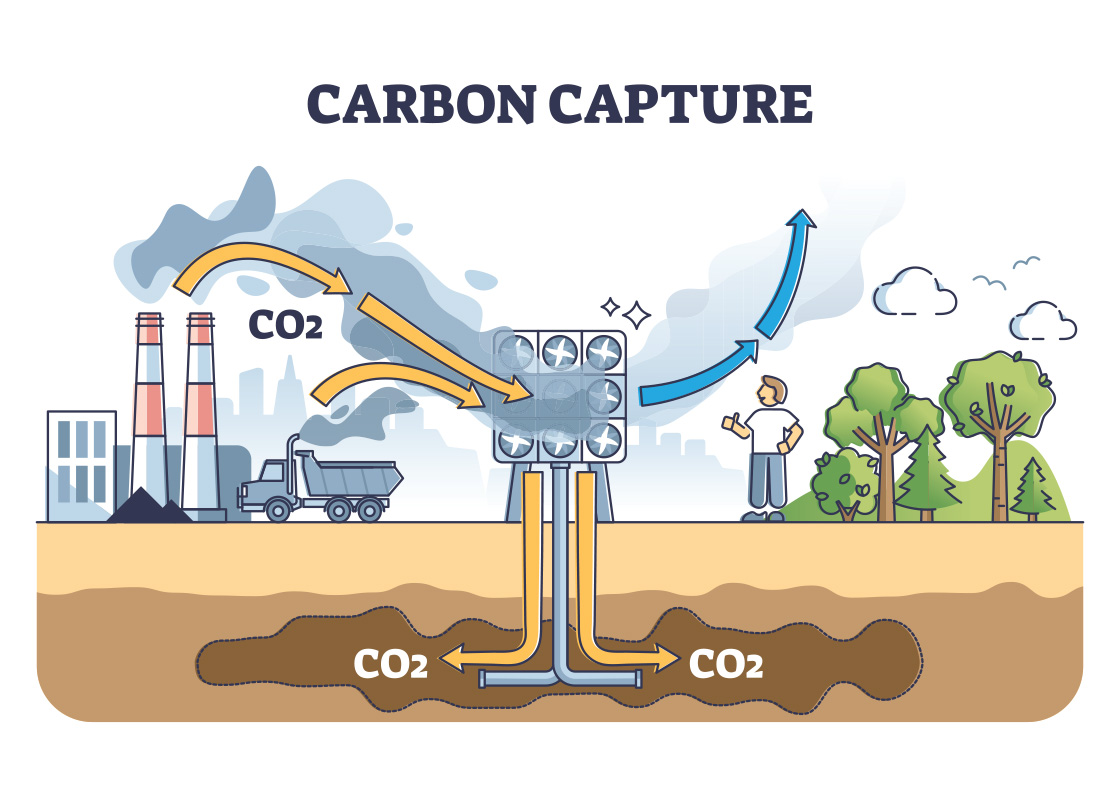
Carbon capture and storage projects face a question that engineering alone cannot answer: when something goes wrong, who carries the financial consequences?
A joint paper published on 12 October by the Oil and Gas Climate Initiative, the Geneva Association and the Clean Energy Ministerial CCUS Initiative brings that question into focus. Enhancing the Insurability of Carbon Management Projects identifies practical conditions that can strengthen risk management, support project bankability and help carbon-management infrastructure scale.
For developers, industrial emitters and investors, the significance is not simply that more insurance products may become available. It is that insurability depends on how a project is designed, governed and connected to the wider carbon-management value chain.
Insurability starts before an insurance policy
The paper identifies four guiding tenets: cross-sector collaboration, clear regulation, assessment of the whole value chain, and clear frameworks for allocating risk. It also highlights the importance of early clarity on post-injection responsibilities and the potential role of targeted public-policy measures in addressing early deployment gaps.
These principles move insurance from a late-stage procurement exercise towards an earlier project-development consideration.
A developer’s practical question should therefore be broader than “Can we buy cover?” It should be “Have we created a project whose risks can be understood, managed and allocated?”
The distinction matters. An insurance policy cannot, by itself, resolve unclear responsibilities or compensate for a project structure that leaves important obligations undefined.
A value chain needs a value-chain risk assessment
The paper explicitly calls for whole-value-chain assessment to support effective risk allocation. Its findings also emphasise project design, governance, risk mitigation and the availability of data—not just the supply of insurance products.
For project teams, this suggests testing the connections between capture, transport and storage rather than reviewing each component in isolation.
Useful diligence questions include:
What happens commercially if one part of the chain becomes unavailable?
Which party carries the consequences of delayed commissioning or interrupted operations?
Where do contractual obligations end, and where do uninsured exposures remain?
What evidence supports the assumptions used to assess risk?
These are questions for commercial negotiations as much as technical diligence. They help expose where a project may look coherent on paper but leave a gap between operational responsibility and financial liability.
Long-term stewardship belongs in today’s financing discussion
The report highlights early clarity on long-term stewardship and post-injection responsibilities as a condition for stronger project confidence.
The practical implication is to bring those responsibilities into financing discussions from the outset. Project teams should establish who will undertake monitoring, how continuing obligations will be funded, and what conditions govern any eventual transfer of responsibility.
The paper does not prescribe a single model. It recognises that carbon-management projects operate in different jurisdictions, regulatory environments and commercial structures.
That makes jurisdiction-specific diligence essential: a responsibility arrangement that appears workable in one market should not be assumed to apply elsewhere.
What investors and developers should take from the paper
A useful response is to build a shared risk-allocation map before approaching final investment decisions.
That map should distinguish obligations retained by project participants, risks that may be insurable, responsibilities requiring contractual remedies, and gaps that may need public-private intervention. The paper identifies targeted public-private mechanisms as a possible means of addressing early-stage deployment challenges, rather than endorsing a universal support model.
Its central lesson is that insurability is an outcome of credible project preparation—not a substitute for it.
Carbon-management projects seeking investment need to demonstrate more than the ability to capture and store CO₂. They need a convincing explanation of how responsibility survives operational disruption and continues after injection ends.
For investors, that is the next financing test: not only whether the technology works, but whether the project’s risk architecture works with it.