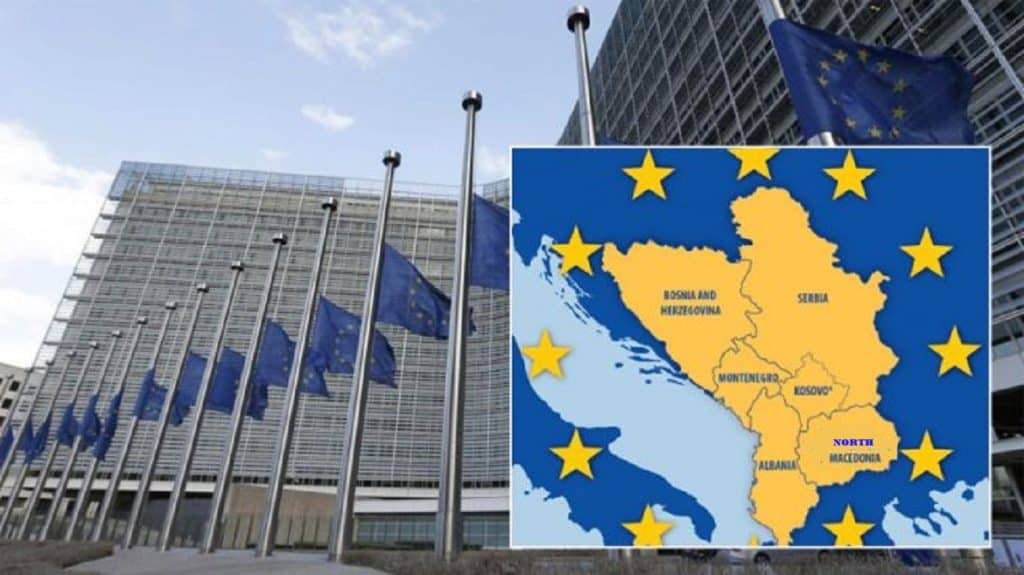
For Western Balkan companies selling carbon-intensive goods into the European Union, the most dangerous CBAM assumption is that the real work can wait until 2027.
The EU’s Carbon Border Adjustment Mechanism entered its definitive phase on 1 January 2026. The first annual declaration and surrender of certificates are due by 30 September 2027, but they cover goods imported during 2026. That makes this year’s production records, emissions calculations and customer agreements commercially important now—not next autumn.
For exporters preparing year-end accounts and negotiating 2027 supply contracts, the distinction matters: a later compliance deadline does not make current shipments carbon-cost free.
The importer has the obligation. The exporter has the evidence.
CBAM covers selected goods in cement, iron and steel, aluminium, fertilisers, electricity and hydrogen. Businesses must check the relevant product classifications rather than assume that every product associated with one of these industries is covered.
The formal obligations sit with the authorised EU CBAM declarant, typically the importer or an indirect customs representative. However, the exporter supplies much of the production information needed to establish embedded emissions. Importers can use Commission default values or verified actual emissions, subject to the applicable rules.
For a steel fabricator in Serbia, a cement producer in North Macedonia or an aluminium supplier in Bosnia and Herzegovina, the practical question is therefore not simply, “Do we file the EU declaration?”
It is, “Can our customer obtain credible, usable evidence from us—and what happens commercially if they cannot?”
A customer’s legal responsibility and a supplier’s contractual exposure are different things. Exporters should establish who provides the data, who arranges verification where required, and how any CBAM-related adjustment will be handled in the sale price.
Do not mistake the 50-tonne threshold for a supplier exemption
The current mass-based exemption applies at EU importer level, across the relevant covered imports during the calendar year. It is not a separate allowance for each exporter, shipment or product code. If an importer exceeds the threshold, obligations cover the relevant imports for that whole year, including earlier shipments. Electricity and hydrogen are outside this mass-based exemption.taxation-customs.
A small Balkan supplier should consequently ask its EU customer about the customer’s position rather than assume its own shipment volumes settle the question.
Electricity exporters face a distinct challenge
Electricity deserves separate attention. The Energy Community’s second-quarter 2026 monitoring highlighted challenges for renewables in demonstrating CBAM compliance. Businesses should not assume that describing electricity as renewable automatically supplies the evidence required under the mechanism.
The regional issue is wider than collecting a corporate carbon footprint. Electricity traders and generators need to establish which calculation and evidence requirements apply to their particular transactions.
Four actions before year-end
For affected Western Balkan exporters, a practical fourth-quarter work programme should cover:
Map exposure. Match exported products to the covered customs classifications and identify the EU importer for each trading relationship.
Reconcile 2026 records. Bring together production volumes, relevant emissions information, input data and the calculation methods needed for the applicable CBAM methodology.
Agree the evidence route. Establish with customers whether they intend to use default values or verified actual emissions, then identify any outstanding verification requirements.
Review commercial terms. Clarify data-delivery deadlines, treatment of corrections and responsibility for any agreed carbon-cost adjustment.
These steps translate the Commission’s importer obligations and emissions-reporting requirements into an exporter-side preparation plan.taxation-customs.
Price exposure needs more than a headline carbon price
CBAM certificates are linked to EU Emissions Trading System allowance prices. The mechanism also accounts for the phase-out of EU free allocation, and qualifying carbon prices effectively paid in the country of production can reduce the corresponding obligation where properly evidenced. A simple calculation of total emissions multiplied by a headline allowance price is therefore not a complete compliance estimate.taxation-customs.
For Western Balkan exporters, the immediate opportunity is to become the supplier that makes this process manageable: accurate records, clear responsibilities and no last-minute surprises.
The first settlement deadline is in 2027. The evidence supporting it is being created now.
Sources
European Commission — CBAM definitive regime:
https://taxation-customs.ec.europa.eu/carbon-border-adjustment-mechanism/cbam-definitive-regime_enEuropean Commission — September 2026 implementation webinar and first compliance deadline:
https://taxation-customs.ec.europa.eu/news/webinar-follow-cbam-policy-practice-emissions-calculation-declarations-and-certificates-2026-09-30_enEuropean Commission — Introduction to CBAM concepts, including threshold and annual reporting:
https://taxation-customs.ec.europa.eu/system/files/2026-08/Guidance%20No.%201%20-%20Introduction%20to%20CBAM%20concepts.pdfEnergy Community — CBAM monitoring reports:
https://www.energy-community.org/topics/CBAM/tracker.html