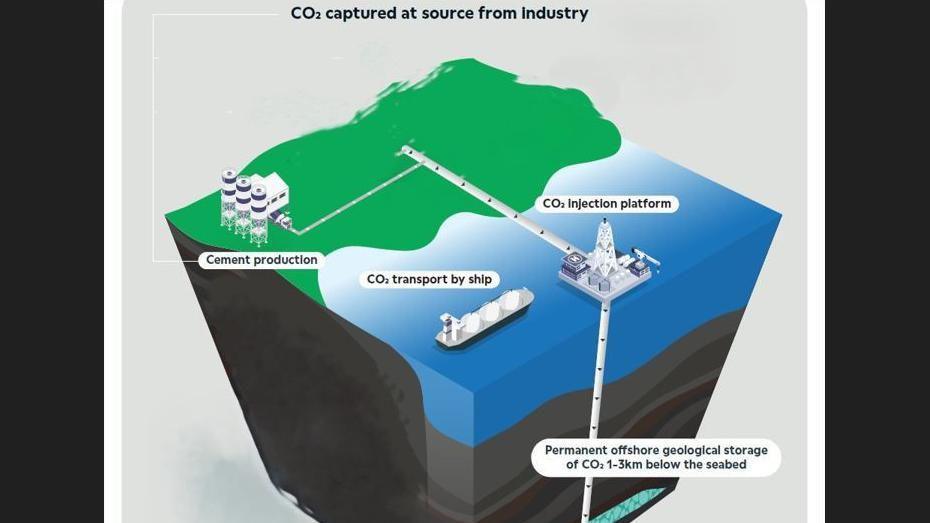
Carbon capture and storage is often described through the language of technology.
Capture units separate carbon dioxide from industrial emissions. Compressors prepare the gas for transport. Pipelines and ships move it to offshore stores. Injection wells place it in deep geological formations, where monitoring systems are intended to demonstrate that it remains securely stored.
All of this is important.
But the practical challenge of carbon infrastructure is not only technical. It is social.
The revision of a proposed carbon-dioxide pipeline route in the Peak District is a useful reminder that projects designed to support industrial decarbonisation also pass through farms, villages, landscapes, businesses and communities. A project can have a compelling climate rationale, strong engineering and potential investment backing. It can still fail—or face costly delay—if people do not understand the risks, do not trust the developer, or do not believe that their concerns have shaped the outcome.
According to BBC reporting, Peak Cluster revised the route of its proposed carbon-dioxide pipeline after engagement with local residents, landowners and stakeholders. The project is intended to transport compressed CO₂ from industrial sites in the East Midlands and North Staffordshire for permanent storage beneath the seabed.
The project’s progress does not answer every question about carbon capture. It does, however, show why the UK’s carbon-management strategy will need to treat social licence as core infrastructure, not optional public relations.
Carbon transport is becoming a real infrastructure question
The UK has significant industrial clusters that will be difficult to fully decarbonise through electrification, efficiency or fuel switching alone.
Cement, lime, chemicals, glass, waste-to-energy and certain process industries can produce emissions that are technically difficult or expensive to eliminate at source. In some cases, carbon capture and permanent storage may play a role in managing residual emissions.
But capture at a factory is only the first step.
CO₂ needs to be transported to storage. That may involve pipelines, road or rail networks, port facilities and ships. It may cross local authority boundaries, private land, agricultural areas and sensitive landscapes. It may require new compressor stations, monitoring infrastructure and access rights.
For communities, the project is not an abstract national climate target. It is a proposed route near homes, farms, businesses or local amenities.
That makes questions of safety, land use, consultation and benefit-sharing unavoidable.
Why social licence matters
Social licence is not a formal permit. It is the ongoing acceptance or legitimacy that a project earns from the communities affected by it.
A planning approval may allow a project to proceed. It does not necessarily create trust.
For carbon infrastructure, social licence depends on whether people believe that:
The project has a clear and credible purpose.
The route has been selected fairly and transparently.
Safety risks have been properly assessed and communicated.
Landowners and communities are being treated with respect.
Concerns can influence project design.
Benefits and burdens are allocated fairly.
The operator will remain accountable over the long term.
These issues are especially important for CO₂ pipelines because the public may be unfamiliar with the technology.
Carbon dioxide is not toxic in the same way as many industrial chemicals, but in high concentrations it can displace oxygen and create serious safety hazards. CO₂ pipelines therefore require robust design, pressure management, route planning, emergency procedures and clear communication with local authorities, emergency services, landowners and residents.
Technical safety standards are necessary. They are not sufficient.
People need to understand what is proposed, why it is needed, how risks are managed and what happens if something goes wrong.
Route changes are not a sign of failure
Infrastructure developers sometimes treat route revisions as a problem to be minimised or explained away.
That is the wrong mindset.
A route change following meaningful engagement can be evidence that consultation has worked. It can show that the project is capable of responding to local knowledge, environmental constraints, landowner concerns and community feedback.
The key question is whether the change is substantive.
A credible consultation process should make clear:
Which route options were assessed.
Which environmental, technical, social and economic criteria were used.
What feedback was received.
What changed as a result.
What concerns remain unresolved.
How people can remain involved through later stages of design, construction and operation.
This level of transparency can reduce conflict, but it also improves project quality.
Local communities often identify practical issues that are not visible in desk-based assessments: access constraints, drainage patterns, agricultural operations, local flood history, habitat sensitivity or cumulative impacts from other developments.
Listening is not simply a political exercise. It is a form of risk management.
The landowner question
Pipelines require land.
That creates a set of practical issues that deserve more attention than they often receive in national policy debates:
How are landowners approached?
What information is available before agreements are requested?
How are temporary construction impacts managed?
What compensation is offered?
What happens to drainage, soil quality, access and agricultural operations?
Who is responsible for restoration?
What rights remain after construction?
How are future maintenance and emergency access handled?
For farmers and rural businesses, a pipeline can affect more than one parcel of land. It can influence crop rotations, livestock management, access routes, machinery movements, drainage systems and investment decisions.
Projects need clear, long-term arrangements rather than narrow construction-period commitments.
The best approach is not simply to negotiate individual easements. It is to build a transparent land and community strategy that explains how impacts will be assessed, compensated and monitored over the life of the asset.
Community benefit should be more than a cheque
Carbon infrastructure may create national benefits through emissions reduction, industrial retention and investment. But local communities often experience the disruption.
That creates a legitimate question: how should local benefits be structured?
A one-off community fund can be useful. But it should not be the only answer.
Meaningful benefit can include:
Local employment and skills programmes.
Procurement opportunities for local businesses.
Support for community energy, resilience or environmental projects.
Investment in local infrastructure.
Transparent monitoring and access to information.
Long-term funding linked to operational performance.
Community representation in oversight arrangements.
The appropriate model will depend on the project and location. The principle is that communities should not be asked to accept local impacts solely on the basis of national climate targets.
A credible project should be able to show what it contributes locally as well as nationally.
The importance of long-term accountability
CO₂ transport and storage infrastructure may operate for decades.
That raises a question that is not always visible during planning: who remains responsible over the long term?
For pipelines, this includes inspection, maintenance, integrity management, emergency planning and eventual decommissioning.
For storage, it includes monitoring, verification, liability and the transition of responsibility once injection ends.
These are not simply regulatory issues. They are trust issues.
Communities are more likely to accept infrastructure when responsibilities are clear, operators are identifiable and monitoring information is available. The more complex the project, the more important it becomes to explain the chain of accountability across capture sites, transport operators, storage providers, regulators and public authorities.
Carbon infrastructure needs a new project standard
The UK’s industrial decarbonisation strategy will need pipelines, storage sites, ports, transport hubs and shared infrastructure. It will also need a better model for developing them.
The old infrastructure approach—define a route, seek consent, manage objections—will not be enough.
Carbon infrastructure should be developed through a different standard:
Start engagement before the route is fixed.
Communities and landowners need the chance to shape options, not only respond to a preferred route.Explain safety in plain language.
Technical reports are necessary, but they should be accompanied by accessible explanations of risks, safeguards and emergency arrangements.Treat land as a long-term relationship.
Agreements should address construction, restoration, access, maintenance and future rights clearly.Make benefits tangible.
Local benefit should be designed around skills, procurement, resilience and environmental outcomes—not only one-off payments.Publish monitoring and accountability information.
Trust depends on people being able to see who is responsible and how performance is being checked.Connect carbon infrastructure to local economic strategy.
Projects should demonstrate how they support jobs, industrial resilience and local development as well as national climate goals.
The climate case must be earned locally
Carbon capture and storage may become an important part of the UK’s industrial transition. But the climate case alone will not deliver the required infrastructure.
Every pipeline route, storage project and transport hub will need to earn legitimacy where it is built.
Peak Cluster’s route revision is a useful reminder that the route to net zero runs through real places. The most successful projects will not be those that merely secure permission. They will be those that build trust, demonstrate accountability and leave communities better able to see themselves as participants in the transition rather than obstacles to it.