Carbon credits are often discussed as a corporate communications tool: a company buys credits, retires them and announces climate progress.
That model is becoming harder to defend.
The next generation of carbon-market activity is increasingly focused on whether long-term finance can support real operational change: new equipment, lower-emission production methods, improved land management, more resilient livelihoods and better environmental outcomes.
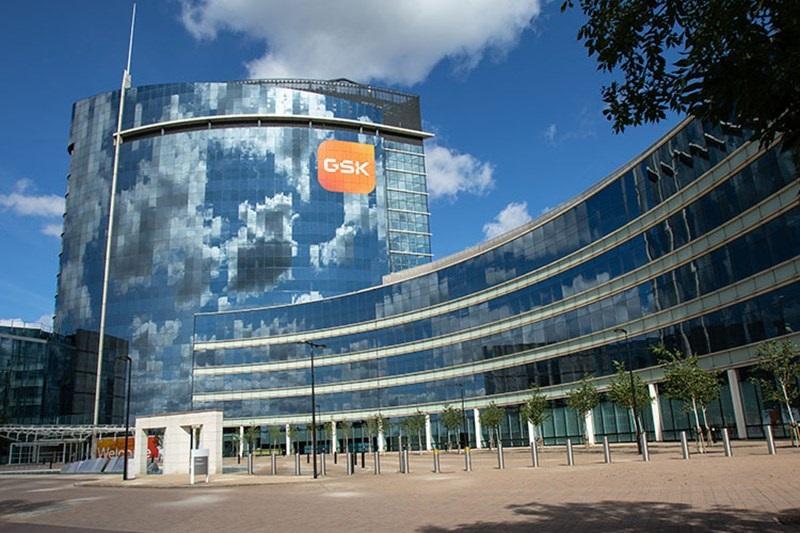
GSK’s newly announced agreement with Indian carbon-removal developer Varaha offers a useful illustration.
The biopharmaceutical company has signed an eight-year agreement to purchase more than 500,000 carbon-removal credits associated with a regenerative-agriculture programme in northern India. The project is designed to expand across 50,000 hectares of farmland in Punjab and Haryana and is expected to generate around 100,000 credits a year between 2028 and 2033.
But the most important feature is not the headline credit volume.
It is the financing model behind the transaction.
The programme aims to help smallholder farmers move away from residue burning, intensive tillage and flood-irrigated rice transplanting towards practices such as direct seeded rice, reduced tillage and crop-residue incorporation. Farmers receive subsidised access to machinery and a share of carbon-credit revenue.
That moves the conversation from carbon accounting to farm finance.
Why long-term buyer commitments matter
Many climate and nature projects fail to scale because the people expected to change their practices face immediate costs while the benefits arrive later.
A farmer may understand that burning crop residue damages air quality and soil health. But if the alternative requires machinery, labour, training, time or cash they do not have, the lowest-cost short-term option often wins.
Carbon finance can help close that gap—if it is designed well.
A multi-year purchasing agreement gives a project developer more certainty about future revenue. In turn, that can help finance equipment, extension services, measurement systems, farmer engagement and operational support.
The logic is straightforward:
Long-term buyer commitment→more predictable project revenue→investment in practice change→measurable climate and farm outcomes
This is potentially a more constructive use of carbon finance than relying on short-term spot purchases of low-cost credits with limited visibility of how project benefits are sustained.
The potential co-benefits are material
According to GSK and Varaha, the programme’s first monitoring period covered 42,000 hectares and avoided 4,574 tonnes of fine particulate-matter emissions from crop-residue burning. It also reportedly saved around 59.5 billion litres of water.
The companies say participating households recorded a 12% to 16% increase in average income during that period, linked to a combination of higher yields, lower fertiliser costs and a share of carbon-credit revenue.
These figures should be read as project-reported outcomes, subject to the methodology and verification processes that underpin the credits. They are nonetheless important because they point to the broader value at stake.
Regenerative agriculture can potentially contribute to:
Lower greenhouse-gas emissions
Improved soil carbon and soil health
Reduced air pollution from crop-residue burning
Lower water use
Greater climate resilience
Better farm economics where practice changes reduce input costs or improve yields
More secure livelihoods and local economic participation
The challenge is to ensure those outcomes are real, measured consistently and fairly shared.
Carbon finance is not automatically high integrity
A long-term removal deal is not automatically a high-integrity deal.
Agricultural carbon projects are complex. Soil-carbon levels can vary across fields and seasons. Weather can affect outcomes. Farmers may change practices for reasons unrelated to credit revenue. Emissions reductions from fertiliser, irrigation or burning need robust baselines. Soil-carbon gains may be difficult to measure precisely and may not be permanent.
That means buyers should not evaluate projects through volume alone.
They should ask disciplined due-diligence questions.
Due-diligence question | Why it matters |
|---|---|
What activity is being credited? | Distinguishes soil-carbon removal, avoided emissions and other project outcomes |
What is the baseline? | Tests whether the claimed benefit is genuinely additional |
How are outcomes measured? | Determines whether soil, water, emissions and farmer benefits are credibly quantified |
What happens if farmers stop participating? | Addresses durability and delivery risk |
How are farmers paid and protected? | Tests equitable benefit sharing and informed participation |
Who owns data and carbon rights? | Clarifies legal rights, consent and future value allocation |
How does the buyer describe the purchase? | Helps prevent claims that overstate the climate benefit |
These questions are especially important when a company uses credits in public communications, transition reporting or product-related claims.
A company should not imply that a purchase has neutralised all of its emissions unless the claim is appropriate, well evidenced and consistent with emerging green-claims expectations.
The buyer’s role is changing
The strongest corporate buyers are starting to behave less like offset purchasers and more like long-term partners.
That means aligning procurement with a credible transition plan, committing capital over multiple years, sharing appropriate project risk, supporting transparent monitoring and being cautious about public claims.
GSK has stated that the agreement represents around 7% of its forecast residual emissions under its current reduction pathway. That framing matters. It places the carbon-removal purchase alongside, rather than in place of, a broader emissions-reduction strategy.
This is the direction in which credible corporate climate action needs to move.
First, reduce value-chain emissions as far as possible. Then, for genuinely residual emissions or beyond-value-chain climate finance, procure high-integrity credits or removals through a governance process that recognises delivery, permanence, social and reputational risk.
A model with wider relevance
The GSK–Varaha agreement may be particularly relevant for sectors with agricultural supply chains, including food, beverage, retail, textiles, consumer goods, hospitality and financial services.
However, its core lesson applies more widely.
Carbon markets can create value when they direct long-term capital toward practical, locally appropriate solutions that would otherwise struggle to secure finance. They are less credible when they allow buyers to make grand claims without taking responsibility for the quality, durability and distribution of outcomes.
For project developers, the opportunity is to build programmes that make business sense for participants—not simply carbon-accounting sense for distant buyers.
For farmers, that means the transition must reduce risk, improve access to tools and create a fair share of economic value.
For buyers, it means recognising that a credit represents an ongoing relationship with an underlying project, not a one-off line item.
The next test
The future of agricultural carbon finance will depend on whether the market can deliver three things at once:
Verifiable climate outcomes
Meaningful value for farmers and local communities
Credible, proportionate corporate claims
GSK’s agreement does not resolve every methodological or market-integrity question. But it points to a more useful model: using long-term demand to finance operational transition where it is needed most.
That is a higher standard than buying a credit.
It is also a more promising way for carbon finance to support climate, health, water, air-quality and livelihood outcomes together.