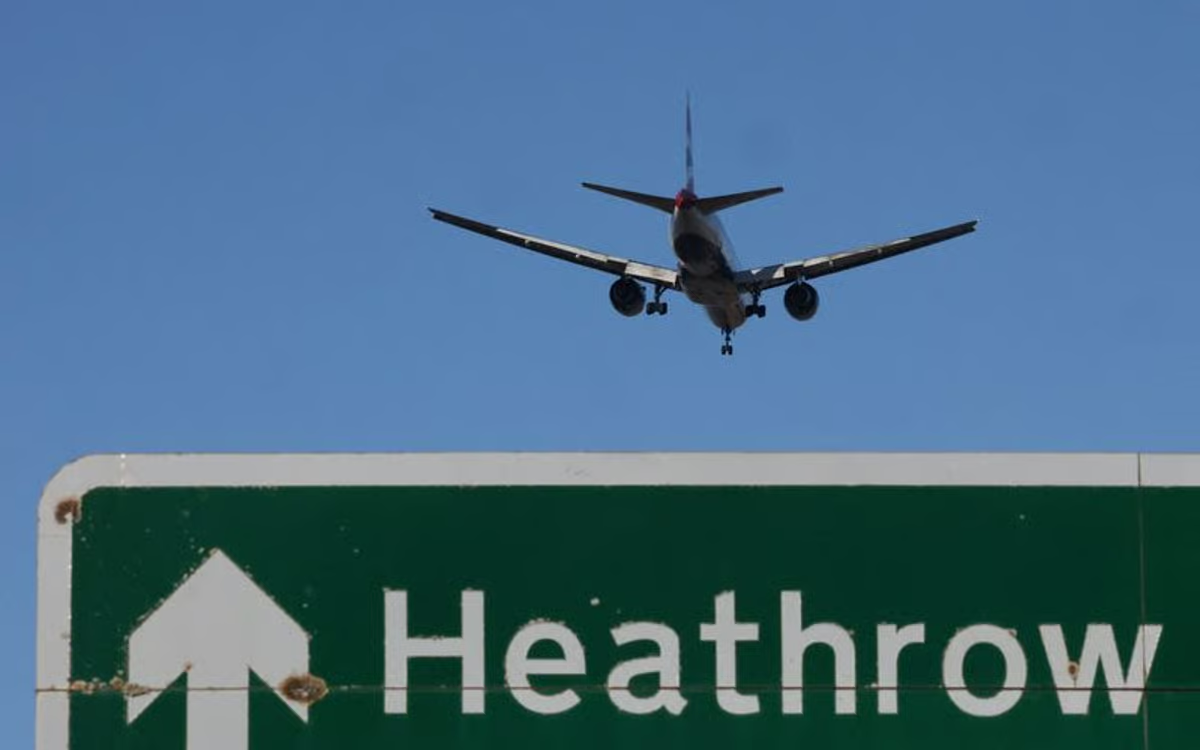
Aviation has always posed a hard problem for net-zero policy. It is economically significant, internationally connected and technically difficult to decarbonise at speed. Unlike some sectors, there is no single substitute that can remove the climate impact of flying in the near term.
That makes the debate around Heathrow expansion more than a question of planning permission or airport capacity. It is becoming a test of whether carbon budgets can still function as a real constraint on high-emitting infrastructure—and whether the aviation industry will be required to fund the emissions it cannot yet avoid.
According to reporting on the UK Climate Change Committee’s advice, Heathrow expansion would need to be accompanied by a much stronger package of aviation decarbonisation measures. Those measures include improving aircraft and airspace efficiency, increasing the use of sustainable aviation fuel (SAF), and requiring airlines to pay for permanent carbon dioxide removal and storage for residual emissions.
This is an important shift in the framing of aviation policy. The question is no longer simply whether aviation can become cleaner. It is whether growth in aviation can be consistent with a finite national carbon budget when the sector is likely to retain substantial residual emissions for decades.
Why residual emissions matter
The UK’s electricity system has reduced its emissions significantly through the deployment of renewables and the phase-out of coal. Aviation is different. Demand for passenger travel has grown rapidly over recent decades, while the available routes to decarbonisation are more constrained.
SAF can lower lifecycle emissions compared with conventional jet fuel, depending on feedstock, production pathway and associated land-use effects. More efficient aircraft and better airspace management can reduce fuel use per journey. New propulsion technologies may eventually play a role for certain routes.
But none of these measures alone removes the climate impact of a growing aviation system.
That is why carbon removal has entered the discussion. Where emissions remain after credible reductions, a net-zero pathway requires an equivalent quantity of carbon dioxide to be removed from the atmosphere and stored durably. This is not the same as simply buying generic offset credits. The distinction matters.
A credible residual-emissions strategy requires:
Clear evidence that direct emissions reductions have been pursued first.
High-integrity removal methods with robust monitoring, reporting and verification.
Long-duration storage appropriate to the claim being made.
Transparent accounting for how removals relate to the emissions being addressed.
A financing model that assigns responsibility to the emitting sector rather than shifting costs elsewhere.
The principle is straightforward: if an activity continues to create emissions that cannot yet be eliminated, the entity benefiting from that activity should fund both the transition and the management of residual emissions.
SAF is necessary, but not sufficient
The UK’s SAF Mandate is designed to support the supply of lower-carbon aviation fuel and create a market framework for eligible fuel and certificates. The Department for Transport published its first provisional 2026 statistics on 17 September, covering reported low-carbon and fossil aviation fuel, SAF certificates, certificate trades and the carbon and sustainability characteristics of fuel issued with certificates. The department notes that this is an incomplete dataset and that the final 2026 data will be published in November 2027.
This reporting infrastructure matters. A mandate is not only a production incentive. It is also an accounting system: it determines which fuels qualify, how environmental attributes are recorded, how certificates are issued and how claims can be substantiated.
However, SAF should not be treated as a permission slip for unconstrained demand growth. Its supply remains limited, costs are higher than conventional jet fuel, and lifecycle performance varies. The aviation transition will depend on the integrity of both the underlying fuel data and the policy framework that governs its use.
For companies buying SAF certificates or making aviation-related climate claims, the practical questions are therefore increasingly specific:
What exactly is being purchased: fuel, a certificate or an environmental attribute?
Which sustainability criteria were met?
How are emissions reductions calculated?
Is there a credible chain of custody and a risk of double counting?
Does the claim distinguish between avoided/reduced emissions and atmospheric removal?
Carbon removal must become a procurement discipline
The proposal that airlines should pay for engineered removals if aviation expands reflects a wider development in carbon markets: removals are moving from a voluntary, reputational purchase toward a potential cost of doing business in hard-to-abate sectors.
That has implications for airlines, airports, corporate travel buyers, investors and policy-makers.
For aviation companies, carbon removal cannot remain a distant innovation topic. It needs to become part of transition planning, scenario analysis and future cost modelling.
For corporate travel buyers, the focus should move beyond annual offsetting programmes. Travel policies need to connect demand management, supplier engagement, SAF procurement where appropriate, and transparent treatment of residual emissions.
For investors and lenders, the quality of aviation transition plans will increasingly depend on whether they address the full pathway: operational efficiency, fleet renewal, SAF sourcing, demand assumptions and the credible financing of residual emissions.
Growth and net zero cannot be separated
The Heathrow debate shows why the next phase of climate strategy will be defined by accountability. Growth claims, transition plans and net-zero commitments must be able to coexist within the same carbon arithmetic.
The difficult questions cannot be deferred indefinitely:
How much aviation growth is compatible with national climate goals?
Which emissions can realistically be reduced at source?
What volume of high-integrity removals will be required?
Who will pay?
How will the public know that the resulting claims are credible?
Aviation may be a special case, but the underlying principle will apply far beyond airports. In every hard-to-abate sector, net zero requires an honest distinction between emissions that can be reduced now, emissions that may be reduced later, and emissions that must ultimately be removed and stored.
The credibility of the transition will depend on whether that distinction is built into investment decisions today.