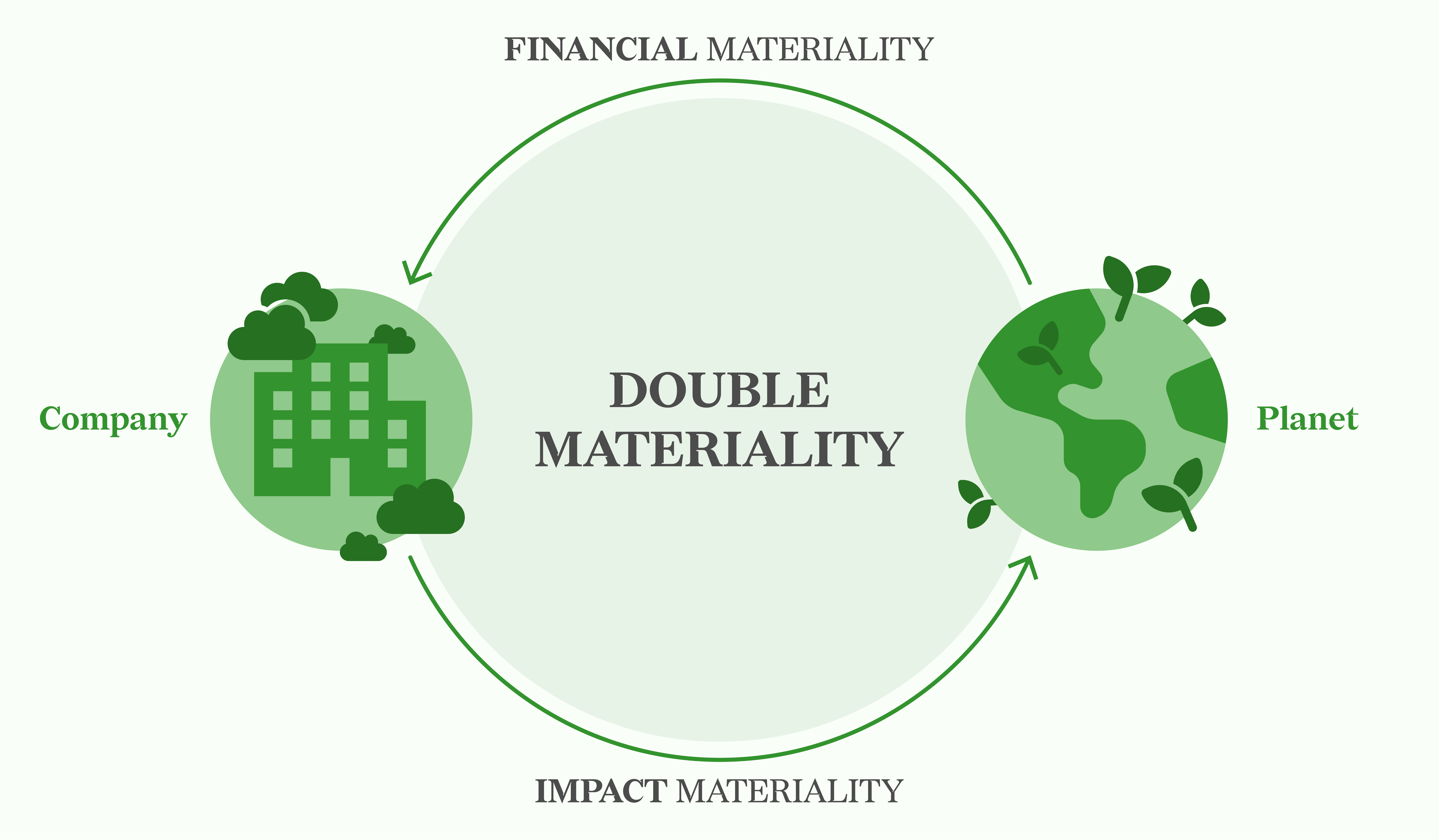
The UK’s proposed overhaul of corporate reporting has attracted attention because it could remove many explicit sustainability-related disclosure requirements from the core strategic-report framework. Environmental impact, employee diversity, social responsibility, community engagement and human-rights reporting are among the areas proposed for removal as separate statutory topics.
It would be easy to read this as deregulation and conclude that sustainability reporting is becoming less important.
That would be the wrong conclusion.
The consultation points to a different direction: a move away from long, topic-by-topic disclosure lists and towards a sharper test of whether an issue is financially material to a company’s performance, position, prospects and resilience. In practice, that may make sustainability reporting less formulaic—but more demanding.
For companies, investors, lenders, procurement teams and boards, the central question is changing from:
“Do we have a section on sustainability?”
to:
“Can we show, with evidence, how sustainability-related issues affect value, risk, cash flow, strategy and decision-making?”
A shift in form, not necessarily in substance
The government’s consultation proposes replacing much of the existing strategic-report content with a more focused set of baseline narrative disclosures. It also considers a new “very large” company threshold to simplify which businesses fall within certain non-financial reporting obligations.
The stated objective is to make annual reports more decision-useful, more proportionate and less cluttered.
That aim is understandable. Many annual reports have become lengthy, repetitive and difficult for investors or other stakeholders to use. A company can disclose hundreds of datapoints and still leave a reader uncertain about the issues that could materially affect margins, access to capital, supply continuity, asset values or licence to operate.
However, removing a topic-specific requirement does not make the underlying exposure disappear.
A business exposed to water stress, carbon costs, extreme weather, labour shortages, supply-chain disruption, deforestation risk or changing customer expectations cannot simply omit the issue if it is financially material. The proposed framework explicitly preserves the expectation that companies report on relevant environmental, employee, social and human-rights matters when they matter to the business.
This is why the transition is better understood as a shift from disclosure volume to disclosure judgement.
Financial materiality needs an evidence trail
Financial materiality is often misunderstood as meaning that only immediately quantifiable climate or ESG impacts need to be reported. In reality, the assessment needs to consider how sustainability issues could reasonably affect enterprise value over the short, medium and long term.
A manufacturer importing carbon-intensive materials may face higher costs through carbon-border rules, supplier price changes and customer procurement requirements.
A food business dependent on agricultural commodities may face supply and pricing disruption from drought, biodiversity decline or deforestation-related due diligence requirements.
A logistics business may face operational disruption from flooding, heat stress, energy volatility, vehicle-transition costs and insurance changes.
A professional-services firm may have comparatively low direct emissions but still face commercially material expectations from clients, lenders, employees and public-sector tenders.
The reporting challenge is not just to name the risk. It is to establish the chain of evidence:
Sustainability issue→business exposure→financial pathway→management response→board oversight
For example, a company might identify that summer heat extremes could reduce the productivity and lifespan of a critical facility. A credible disclosure would connect that issue to operating costs, maintenance budgets, insurance availability, business-continuity planning, capital expenditure and executive accountability.
Without that chain, a sustainability statement can become a set of well-intentioned claims rather than decision-useful corporate reporting.
Why this matters beyond listed companies
The precise companies in scope will depend on the final outcome of the consultation and any future threshold design. But the commercial effects will extend beyond the entities legally required to report.
Large companies do not assess climate, sustainability or supply-chain exposure in isolation. They ask for information from suppliers, investees, contractors, insurers, landlords, logistics providers and portfolio companies.
That means small and medium-sized businesses should not treat the reform as a reason to pause their sustainability work. The more important question is whether they can answer commercially relevant requests with clear, proportionate evidence.
For an SME, that does not mean building a corporate-reporting department. It means maintaining a practical evidence pack that can be reused across tenders, customer questionnaires, financing discussions and public claims. At a minimum, that pack should cover:
Basic organisational and operational data
Scope 1 and Scope 2 emissions, with a transparent methodology
Material Scope 3 categories where relevant
Energy, waste, travel and procurement evidence
Core environmental, social and governance policies
Climate- and supply-chain-risk assessments
Improvement actions, responsibilities and review dates
Clear source documents behind material public claims
This is not administrative overhead. It is commercial infrastructure.
The UK SRS connection
The consultation comes alongside the UK’s wider work on UK Sustainability Reporting Standards, which draw on the ISSB’s IFRS S1 and IFRS S2 standards. The direction of travel is towards sustainability information that is connected to financial reporting, governance and strategy—not treated as a stand-alone corporate-responsibility narrative.
That connection matters because financial materiality requires closer collaboration among sustainability, finance, risk, legal, procurement, operations and the board.
Sustainability teams may identify an emerging risk. Finance may quantify the potential impact. Procurement may determine supplier exposure. Operations may define the mitigation plan. Legal and communications teams may assess claims and disclosure risk. The board must oversee the resulting decisions.
No single department can deliver this alone.
What boards should do now
The consultation is open until 30 November 2026. Companies do not need to wait for its final outcome to strengthen their reporting foundations.
Five practical actions stand out.
1. Re-map sustainability issues through financial pathways.
Identify the environmental and social issues that could influence revenue, costs, asset values, access to finance, supply continuity, insurance, customer retention or strategic flexibility.
2. Test the evidence behind material claims.
For each important metric or statement, document the source, boundary, methodology, assumptions, calculation owner and approval process.
3. Bring finance into materiality governance.
A sustainability materiality assessment should not sit only within ESG or communications. Finance and risk leaders need to help determine which matters could affect enterprise value.
4. Establish a proportionate reporting baseline.
Even where statutory reporting is uncertain, create a structured evidence pack that supports customer requests, investor diligence, tender submissions and future reporting requirements.
5. Treat report design as a management question.
The most useful disclosure is not the longest disclosure. It is the disclosure that helps decision-makers understand the company’s exposures, choices, trade-offs and progress.
The real test
Simplification can be positive if it reduces duplication and focuses attention on the issues that truly matter. But financial materiality is not a shortcut around sustainability accountability.
It is a higher standard of integration.
Companies that respond by cutting data collection, governance and evidence controls may find themselves less able to answer investor questions, customer requests, assurance reviews or regulatory scrutiny. Companies that build a reliable evidence architecture now will be better positioned—whether the request comes from a statutory report, a lender, a procurement portal or their own board.
The UK’s reporting reform should therefore be seen less as a reason to do less sustainability work, and more as an invitation to do the work that connects sustainability to business value properly.