The cloud has made computing feel weightless.
A business can buy storage, software, data processing or artificial intelligence capacity without owning a server, leasing a data hall or managing a cooling system. It can scale usage in minutes. It can deploy new services globally. It can treat computing as a subscription rather than an asset.
But the physical infrastructure has not disappeared.
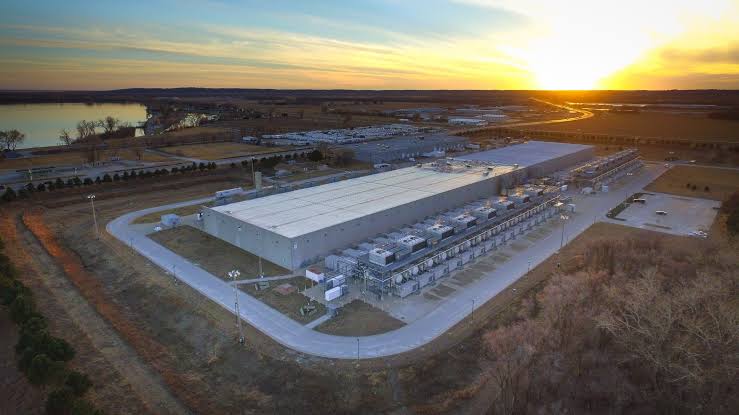
Every cloud service depends on data centres, electricity networks, cooling equipment, buildings, backup power, cables, chips and water systems. As companies use more cloud services and AI tools, they increasingly want to know the carbon footprint of that digital activity.
That question sounds simple.
It is not.
The challenge is carbon attribution: how should emissions from shared data-centre infrastructure be allocated to individual customers, products, workloads or transactions?
A recent analysis by Pinsent Masons highlights that carbon attribution is becoming a central data-centre sustainability issue. Cloud providers are developing methodologies that allocate emissions from computing infrastructure across products and customers. But the underlying calculations involve complex decisions about boundaries, workload allocation, electricity sourcing, location and time.
For businesses, the lesson is not that cloud carbon data is unusable. It is that companies need to understand what the number represents before using it in a report, target, procurement decision or public claim.
Why cloud emissions are hard to allocate
A traditional facility can often calculate its own operational emissions from electricity, fuel, heating, refrigerants and other inputs.
Cloud computing is different.
A single data centre may host hundreds or thousands of customers. Its equipment may run multiple workloads simultaneously. A customer’s demand may shift between servers, regions or facilities. The data centre may purchase renewable electricity through a combination of on-site generation, power-purchase agreements, certificates and grid supply.
This creates several attribution questions:
How much of a shared building’s energy use belongs to each customer?
How are cooling, network equipment and backup systems allocated?
Should emissions be based on average annual electricity use or time-specific marginal grid emissions?
Should a customer receive the benefit of a provider’s renewable-energy purchases?
How should unused capacity be treated?
How are embodied emissions from servers, buildings and equipment allocated?
What happens when workloads move between regions?
Different methodologies can produce different answers.
That does not mean the numbers are wrong. It means they are estimates based on choices.
The key is transparency.
Operational emissions are only one part of the picture
Most cloud-carbon tools focus on operational emissions from electricity use. This is understandable because electricity is a major source of emissions and data is often more readily available.
But operational emissions are not the whole story.
Data centres also have embodied carbon from:
Buildings and construction materials.
Servers and storage hardware.
Chips and network equipment.
Cooling systems.
Backup generators and batteries.
Grid connections and other infrastructure.
As data-centre capacity expands, embodied carbon becomes more material. A company may reduce operational emissions through renewable electricity procurement while still driving significant upstream emissions through rapid hardware turnover or new construction.
A complete digital-footprint strategy needs to consider both operational and embodied impacts.
The location problem
Carbon intensity is not the same everywhere.
A megawatt-hour of electricity consumed in a region with a low-carbon grid has a different emissions profile from the same amount consumed in a coal-heavy system.
The carbon intensity can also vary by hour, season and weather conditions.
This creates a tension between annual matching and real-time impact.
A cloud provider may purchase enough renewable electricity over a year to match total consumption. That can support long-term clean-energy investment. But it does not necessarily mean that every customer workload ran on zero-carbon power at the time it was processed.
For some uses, annual accounting may be adequate. For others, particularly where companies make detailed emissions claims or manage energy-intensive AI workloads, more granular information may become important.
The right approach depends on the decision being made.
A company should not demand perfect hourly data if the information will not change its choices. But it should not rely on a broad annual claim when location and timing materially affect the carbon impact.
AI increases the stakes
Artificial intelligence is making the attribution problem more visible.
AI training and inference can require substantial computing capacity. Workloads may be concentrated in particular regions, use specialised hardware and run at times of high electricity demand.
For companies adopting AI, the sustainability questions are increasingly practical:
Which provider and region will process the workload?
Can workloads be scheduled for periods of lower-carbon electricity?
Is the model efficient for the task it performs?
Does the application create a measurable business or environmental benefit?
How does AI-related computing compare with the emissions it may help avoid elsewhere?
Can the provider offer credible carbon data at the workload or product level?
The question is not whether companies should stop using AI. It is whether they can use it with enough visibility to make responsible choices.
What good carbon attribution looks like
A credible cloud-carbon methodology should be clear about:
The organisational and operational boundary.
The sources of electricity and fuel included.
How shared infrastructure is allocated.
Whether renewable-energy instruments are included.
The location and time basis of emission factors.
The treatment of embodied emissions.
Data quality and uncertainty.
The reporting period.
The difference between provider-level and customer-level claims.
Customers should be able to understand the difference between:
A provider’s corporate carbon target.
A region’s grid carbon intensity.
A customer’s allocated operational footprint.
The estimated embodied footprint associated with hardware and infrastructure.
A market-based emissions figure.
A location-based emissions figure.
These distinctions matter because they affect what a company can credibly say.
Procurement needs to evolve
Cloud and AI procurement is increasingly sustainability procurement.
Many companies already assess security, availability, price, data protection and service levels when selecting digital suppliers. Sustainability should be added to that process.
Useful questions include:
Does the provider disclose regional energy and carbon information?
Can it provide customer-level carbon data?
Does it report both location-based and market-based emissions?
How does it manage water use and cooling?
What is its approach to embodied carbon and hardware life cycles?
Does it use renewable electricity in the regions where our workloads run?
Can workloads be managed for lower-carbon periods or locations?
What assurance or external verification supports the data?
The answers will not always be perfect. But asking the questions will improve decision-making and encourage providers to develop more transparent systems.
Carbon attribution is an evidence problem
At its core, data-centre carbon attribution is an evidence architecture issue.
Companies need to know where a number comes from, what assumptions sit behind it, what it includes and whether it is fit for purpose.
A carbon figure may be suitable for internal tracking but not a public claim. It may be useful for comparing vendors but not for setting a science-based target. It may show market-based emissions but obscure the local grid impact.
The right number depends on the question.
As digital infrastructure becomes a larger part of corporate environmental footprints, companies will need to apply the same discipline they use for energy, travel, materials and supply chains.
The cloud is not invisible. Its emissions are simply distributed across a complex system.
Understanding that system is the next step toward credible digital sustainability.